
Beyond one of Ilkeston’s last pubs, the Mundy Arms, we meet the Bailey family.
The Bailey family of Ilkeston Common
This obituary appeared in the Nottingham Review of November 17th, 1843: “On Tuesday morning (November 14th) Mrs. Sarah Bailey, widow of Mr. Samuel Bailey, lace maker, in the 76th year of her age, and the 33rd of her widowhood, mother of Mr. Gilbert Bailey, broker, Goose-gate, in Nottingham, and of Mr. Joseph Bailey, lace manufacturer, Ilkeston. On the death of her husband, she was left with four young children, and but little property; however, with the most exemplary and unwearied efforts, she was enabled to bring them up and to accumulate a portion of this world’s goods, and has lived to see her family comfortably settled in life. She was universally respected, particularly eminent for honesty and habits of economy — remarkably punctual in her attendance on divine worship, up to the very week preceding her illness, and has left behind her a most joyous testimony of the power and value of the Christian atonement”.
Sarah Burrows was born in Ilkeston in 1768, the daughter of framework knitter Joseph and Sarah (nee Burgin-Richardson) and married stocking weaver Samuel Bailey on February 17th, 1795; he was the son of Samuel senior and Dorothy (nee Dennis). Three of their seven children died in infancy so that they were left with the four children mentioned in the obituary. Gilbert was the oldest, born in 1801, who married Frances Wilson on September 23rd, 1830 and then worked as a furniture broker in Nottingham. He died in 1861. Samuel was born in 1802, married Ann Hopewell on November 10th, 1829, and worked as a tailor in Ilkeston until he died on December 19th,1848. Eliza was born in 1805, married Hucknall farmer John Stendall on January 28th, 1828, and went to live at his home town where she died in 1883. Which leaves the final, and youngest child, Joseph Bailey, born on March 22nd, 1828, and brings us to his factory on Heanor Road.
Bailey’s factory.
Adeline Wells remembers this factory … “‘Bailey’s Factory,’ as it was called was situated on the Common, at Heanor Road, and was built in 1856 by Mr. Bailey and his son, in conjunction with Mr. John Taylor, a gentleman farmer who lived in the Manor House.
It was expected that a good trade would be done, many people employed, and that Ilkeston would reap a rich harvest from the speculation. But these great expectations were not realised.
There was a slump in the lace trade. The factory was closed. Baileys left the town and Mr. Joseph (sic) Taylor, who was the chief financier, lost a great deal of money causing him financial difficulties“.
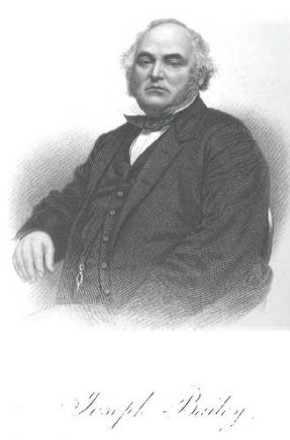
Born in Ilkeston in 1808 Joseph Bailey was a son of stocking weaver Samuel and Sarah (nee Burrows), and married Sarah Shaw on April 10th 1826.
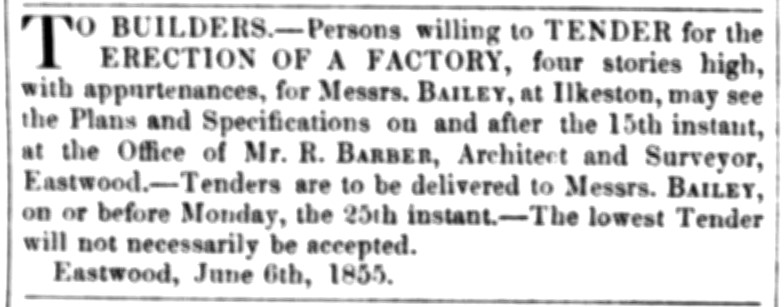
He was a first cousin of Gilbert Bailey, farmer of Nottingham Road. After marriage Joseph worked in this area as a lacemaker and in 1855 designed and later built his new Heanor Road factory — the second in a series of large factories to operate in the town and costing £4000 – with his eldest son, Ezekiel James.
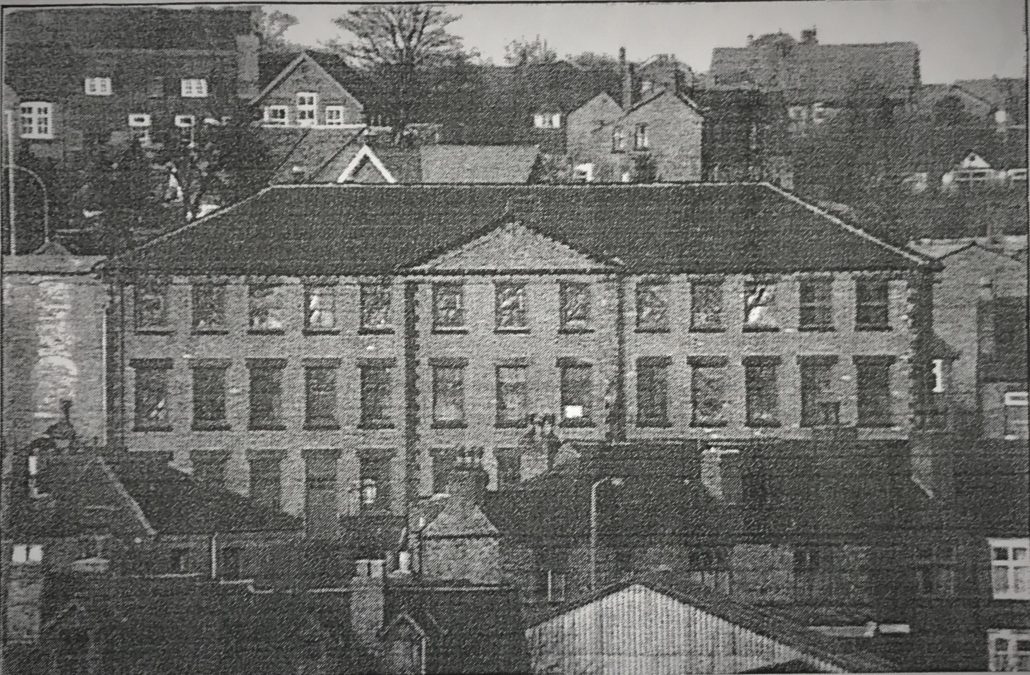
Baileys Factory, seen from the south ………. from the collection of the late Mike Jobling
White’s Directory of 1857 describes the factory as “a noble building 100 feet long, 34 feet wide, and four stories in height, with a steam engine of 12 horse power, and upwards of 40 machines, suitable offices, and every other convenience, arranged and fitted up in accordance with the most recent improvements. The number of hands employed is 350 to 400”.
And at the beginning of that very year, those same hands decided to strike, ceasing to work for Messrs Bailey until they had received an increase in their wages. And the union agreed to pay each worker 12s per week so long as they remained out of employ. Fortunately the Union met with the employers and by February 3rd it had been agreed to give the men the advance they had asked for.
This is where John Taylor enters the picture. in February 1859. He was an extensive landowner in Ilkeston and elsewhere, and in the winter of 1857 had mortgaged all his copyright properties for a considerable sum of money. In February 1859 he partnered Joseph and Ezekiel James Bailey in raising another substantial mortgage, partly using the new leasehold lace factory as security. Also included was the factory’s ten horsepower high presssure steam engine and two boilers, heavy and light gearing and driving machinery, gas piping and fittings, waters and regulators, steam piping and heating apparatus, etc. Into the agreement, Joseph Bailey also chucked in numerous houses in the Granby Street and Great East Street areas. And John did likewise with land and property at Kimberley, Draycott, Sawley and in Ilkeston.
—————————————————————————————————————————————————-
On the south side of the factory, where Heanor Road meets Granby Street, an ornamental pond and gardens, surrounded by trees was added.
In addition to these works the family had an interest at High Pavement, Nottingham. But as Adeline records it was not long before the business was in trouble and passed out of the family’s hands.
In 1860 the local lace trade was suffering serious difficulties and in August of that year Messrs. Bailey, Son, & Co. suspended operations — having been in trading and financial difficulties for some time.
The Pioneer reported that this would have serious consequences for the town as Baileys “had been doing a very extensive business….and were paying a large amount for wages”.
The stoppage “will prove a great disaster to many families and to the town generally”.
In October of that year John Taylor dissolved his partnership with Joseph and Ezekiel James Bailey.
However in January of the following year the Nottinghamshire Guardian was still referring to the firm of “Messrs. Bailey, Son & Co.” who had kindly granted the use of their “new and spacious finishing room” to host the Erewash Valley rifle volunteer ball.
In August 1862 Ezekiel James left the partnership of T. Shaw, E.J. Bailey, J.H. Haywood and W. Vernon and was then employed by Thomas Shaw and Co., lace manufacturers of Pilcher Gate, Nottingham who now took on Bailey’s Heanor Road factory..
(This is the same Thomas Shaw, builder of Ilkeston … and of Pigstye Park).
And in early 1867 the Pioneer reported that “the factory which has been so long in the hands of the assignees of Bailey and others, doing nothing, is likely to be very soon started again by a Nottingham firm. The other factories in the town are at present doing very little, trade having been slack for several months”.
Sure enough, a month later, in April 1867, the same newspaper was reporting that the factory had now been taken over by Messrs Hill and Swanwick, lace manufacturers of Lenton, Nottingham.
The original engine boilers were too small for the new owners and larger ones were planned. Samuel Smith, aged 51, bricklayer of Sherwood Street, Nottingham, was hired to build the new foundations for these boilers, within excavated earthworks which were supported by wooden props…but not well enough. During the building work the earthworks gave way and Samuel was crushed — his thigh and both legs were broken, several ribs were fractured and one eye was injured. (He was taken to Nottingham General Hospital).
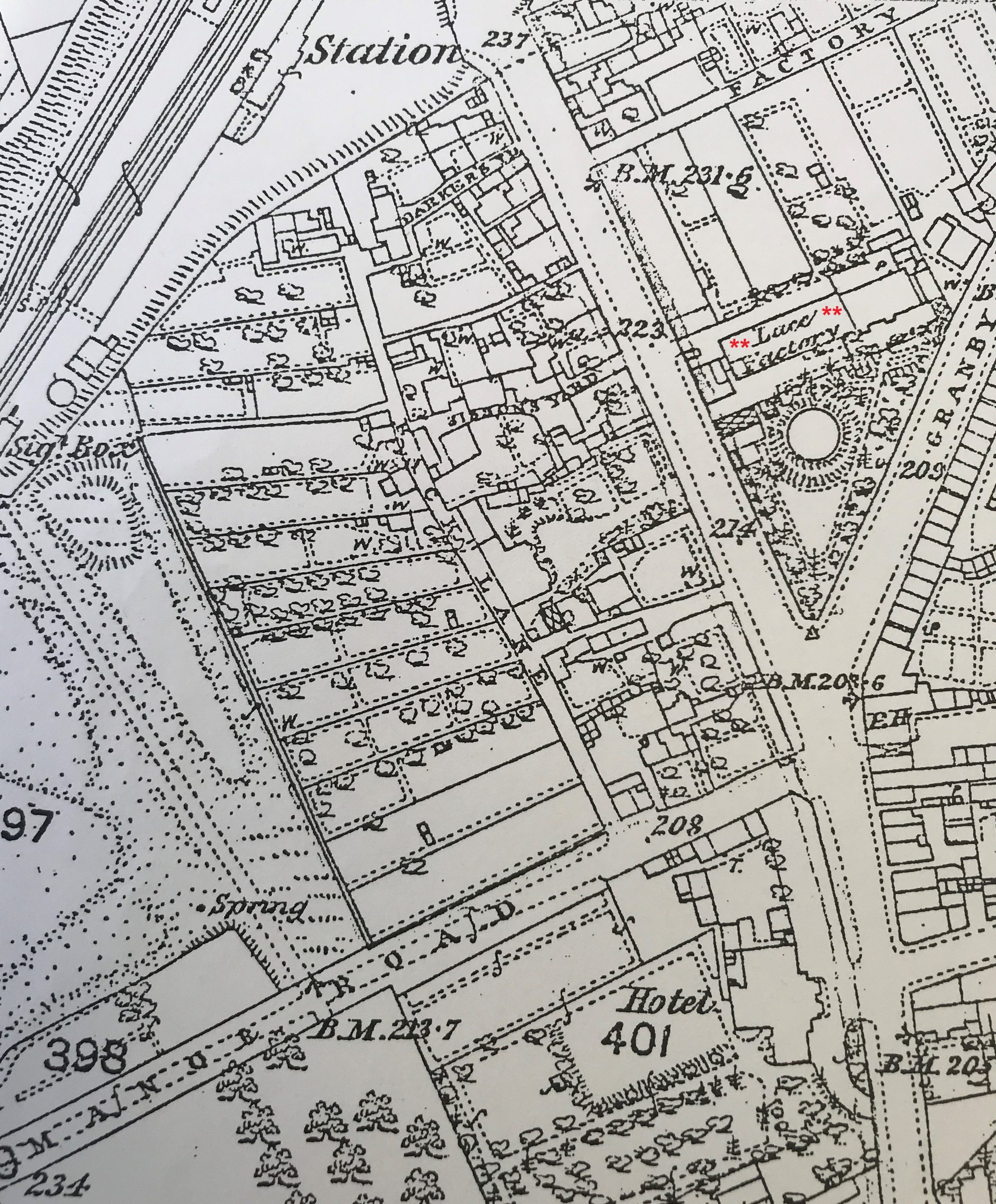
The map, right, shows the area about 1881
At this time the factory was housing J. Hill and Co, lace manufacturers, then run by a partner in the business, William Hewitt.
William and his family lived at Granby House, 1 Granby Street … I believe it can be seen on this map.
When the factory was first built a circular pond and garden occupied the frontage right down to the junction between Heanor Road and Granby Street, with a belt of trees around its perimeter, so that the factory truly dominated its neighbourhood …. Mike Jobling (see below)
Can you spot these, south of the factory ?
William Hewitt died on January 21st 1889. In December 1891 all of his factory plant and machinery was put up for sale by private treaty, as a ‘Going Concern‘ — 26 Levers Lace Machines, a Winding Engine, Warping Mills, and Card Punching Machines.
William’s Estate also included 12 houses in Belvoir Street, the Temperance Hall and two adjoining cottages in Lower Granby Street, and the unexpired portion of the factory lease. This had begun on Christmas Day of 1854 and was then, for a term of 62 years.
It would appear that the factory, its contents and the remainder of the lease were not sold because — lo and behold — they were all up for sale once more in April 1892 … but without the other premises (presumably sold previously ?). And would you believe it ? …. in April 1893 .. they were being advertised for sale once more … and in July !!!
In an article for the IDLHS Newsletter (September 2004) the late Mike Jobling, Local Studies Librarian for Erewash, continued the story of Bailey’s Factory …
From the early 1890’s until around 1905 the factory was occupied by Messrs Copestake, Linsay, Crampton & Company, Lacemakers of Nottingham, but by 1906 the hosiery manufacturers J.B Lewis had taken up residence here as well as in their large factory at Ilkeston Junction’
In 1939 the Heanor Road factory was occupied by Dicona Ltd., contractors to the Government, who made such items as gas protection clothing, lifebelts, pouches and haversacks for the armed forces and other defence departrments throughout the Second World War. Afterwards a branch factory of the Tropicalisation & Packing Co. Ltd. of Worcestershire became established here, specialising in the preservation and packaging of goods for overseas use. Norton Plastics arrived in late 1946.
—————————————————————————————————————————————————-
Several of the Baileys, including father Joseph, his wife Sarah, their sons Ezekiel James and Joseph junior, along with daughter Emma found their way to London. There, Joseph junior bought an area of land in Camberwell and in that area ‘Pilgrim’ found himself house-hunting one day.
“I was quite taken aback by getting lost in streets with Derbyshire names and amongst villas, each pair bearing the name of a village in Derbyshire. On further inquiry, I found that Mr. Bailey had secured a large plot of land on which he had erected over one hundred pairs of villas, hence the names of streets and houses. It was intensely amusing to read such names as Heanor, Codnor, Smalley, Ilkeston, etc., and Derwent-street, Ashbourne Grove, etc. etc.” (1892)
Joseph died at Lavender Hill on July 17th 1882, and his wife Sarah died in 1885. Their eldest child, Ezekiel James, died at 7 Stanford Avenue, Brighton, aged 69. Thanks to Robert Flanagan, I now know that they were all buried at Norwood Cemetery, Lambeth (grave 19215/119). Frances Bailey, wife of Ezekiel James, died in 1882 and is buried in the adjoining grave (19449/119).
—————————————————————————————————————————————————
Bradley’s Inn alias the Rutland Cottage
Adeline points out the rather bleak nature of the road in the mid-ninteenth century. “There were no more buildings on the East side of Heanor Road, except Bradley’s Inn”.
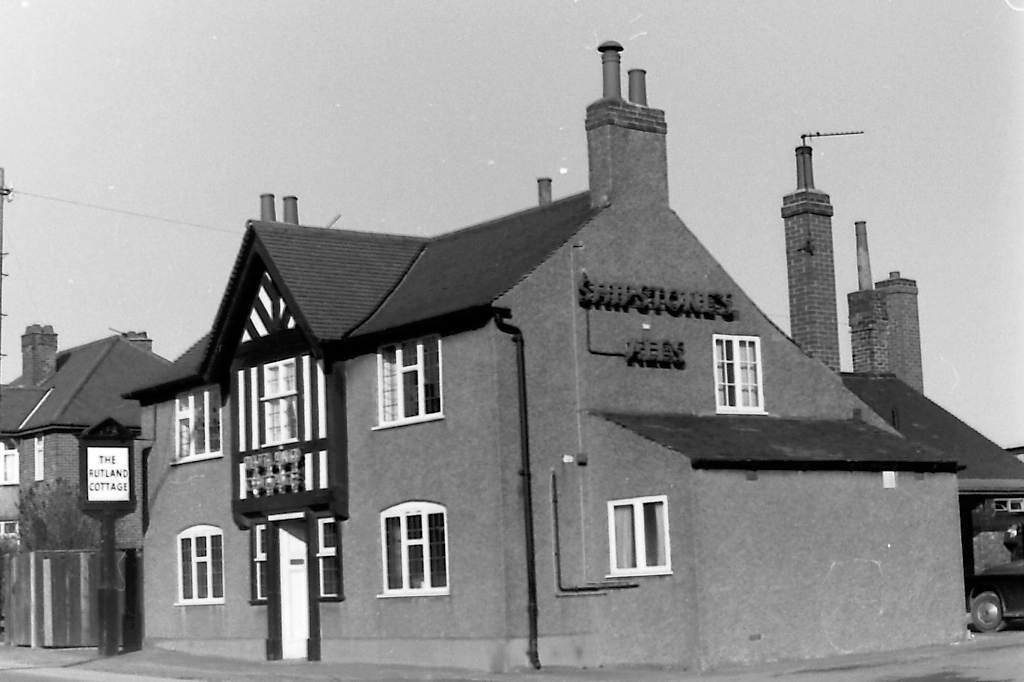
The Rutland Cottage on Heanor Road in later life (from Jim Beardsley‘s collection)
Bradley’s Inn was the Rutland Cottage beerhouse, in the hands of Henry Bradley, son of clockmaker Thomas and Mary (nee Smith).
And when he died in January 1841 his wife Judith Bradley (formerly Roe) was beer seller there.
And when she died in March 1858 her son Henry Bradley junior assumed control.
And when Henry junior died in November 1884 his youngest child William Bradley occupied the inn.
And when he died in February 1903 his wife Pamela Bradley (nee Tomlinson) was innkeeper.
No wonder Adeline knew it as Bradley’s Inn!
It was Henry junior who, in November 1878, was fined £1 with his licence endorsed at Heanor Petty Sessions for permitting gambling at bagatelle at the beerhouse.
The fact that he had a bagatelle board on his premises without the permission of the magistrates was an offence in itself. He was advised to get rid of the bagatelle as soon as possible. The offence had been uncovered by a plain-clothes police officer.
… and other pubs in the area ?
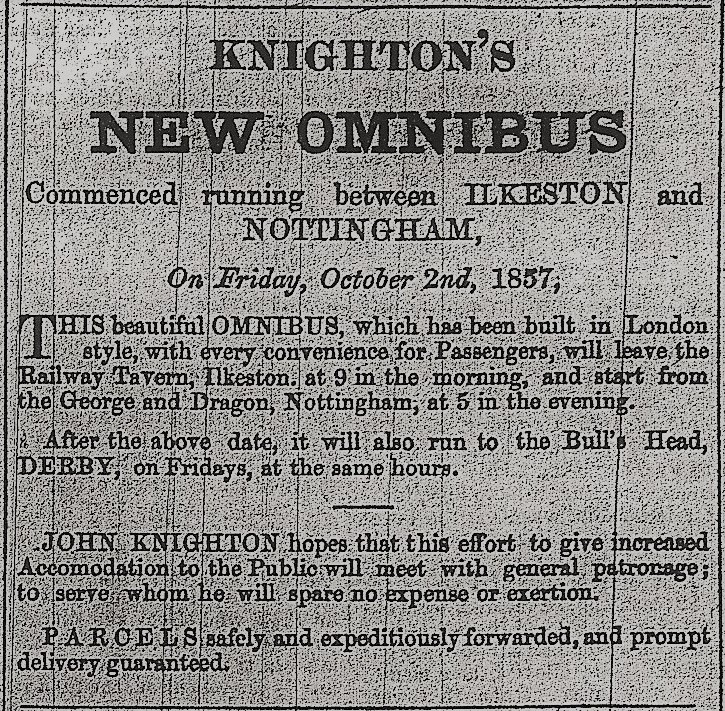
From the Ilkeston News October 10th 1857
John William Knighton had long been a beer retailer (as well as a coalminer) and is mentioned in many directories as such, from at least the mid-1830s.
His beerhouse was variously described as being on the Common, and on Middle Road (Granby Street).
He was also a carrier, and just before the publication of the Advertisement (left), ran a service to Derby from Granby Street, and to Nottingham, also from Granby Street, every Wednesday and Saturday.
When he died in 1863 his widow Hannah (nee White) continued the retailing of beer.
Was the ‘Railway Tavern’ mentioned here, John William’s shop in Granby Street ? Or was it a reference to the (Rutland Arms and) Railway Hotel of Thomas Hives ?
Derby Arms
Since about 1862 Richard Beardsley, erstwhile collier of Trowell, had kept the Derby Arms in Cotmanhay Road. He reckoned it was about 200 yards from the Mundy Arms of Henry Clay, in Bath Street, and about 95 yards from the Granby Arms, also in Cotmanhay Road, kept by Phoebe Knighton, wife of Henry. She was the daughter of William and Phoebe Bell, formerly proprietors of the Travellers’ Rest in Nottingham Road. In December 1884 Richard relinquished the licence to John Wright.
 The Derby Arms in later life .. from the personal collection of Jim Beardsley
In 1885 the Derby Arms was kept by Herbert Sadler who, in that year, applied for a full licence. A similar application had been refused in the previous year because the premises had no stables, but since then, Herbert had enlarged the inn, and spent £200 in providing stabling. It was now suitable for a full licence; and the local population had also grown significantly in that year. The magistrates were very harsh however and once more refused Herbert.
In 1887 Thomas Attwood had just arrived as landlord and, armed with a memorial signed by 11 members of the Town Council, he tried his luck with the licensing magistrates. By now the Derby Arms had been a beerhouse for 25 years and when Thomas left the court it was still a beerhouse — his application for a full licence was refused.
By August 1888 the licence was held by Joseph Kirk who now asked for a full licence — declined once more by the magistrates. One reason given for this was the close proximimity of the Great Northern Inn. At that time it was owned by John Trueman. Joseph was still the landlord in August 1896 but by now he was also a member of the Town Council. He had gathered together a lot of supportive signatures onto a petition to apply for a licence to sell wine … the Derby Arms was only allowed to sell draught beer and stout. Sadly for Joseph, his ‘elevated status’ did not sway the magistrates and his application was refused. But only for a short period — in September of 1897 Joseph at last got his wine licence.
Trumpet Inn
In the Nottingham Review (August 14th, 1846) a first anniversay meeting of the Bagthorpe Lodge of Ancient Foresters was described as taking place at “Host Sisson’s, the Trumpet, Cotmanhay, near Ilkeston”. The host was Enoch Sisson who occupied the beerhouse at least from 1842 until his retirement and then continued to live in the adjacent Trumpet Yard until his death in 1890. The Nottinghamshire Guardian referred to it as “the Sign of the Bugle Horn“. It stood in Cotmanhay Road, opposite what is now Vernon Street.
In February 1887 the licence was transferred from John Bostock to Thomas Partridge.
Jolly Boatman
The Boatswain appears in early nineteenth century trade directories occupied by William Burgin (1829) who died in 1830, then by his widow Elizabeth Burgin (-Richardson) in 1835, and then by their son James in 1841. I believe that around this time its name was changed to the Jolly Boatman (see Bagshaw’s Directory of 1846). The address of the Inn appears in various sources as ‘The Potteries’ or ‘Canal Side’. It is shown on the 1881 Ordnance Survey map of Ilkeston on the west side of the Erewash Canal, a short distance to the south of Barker’s Bridge, where Awsworth Road crosses the canal.
If you look on Google Maps it was approximately at the east end of what is now Boatsman Close.
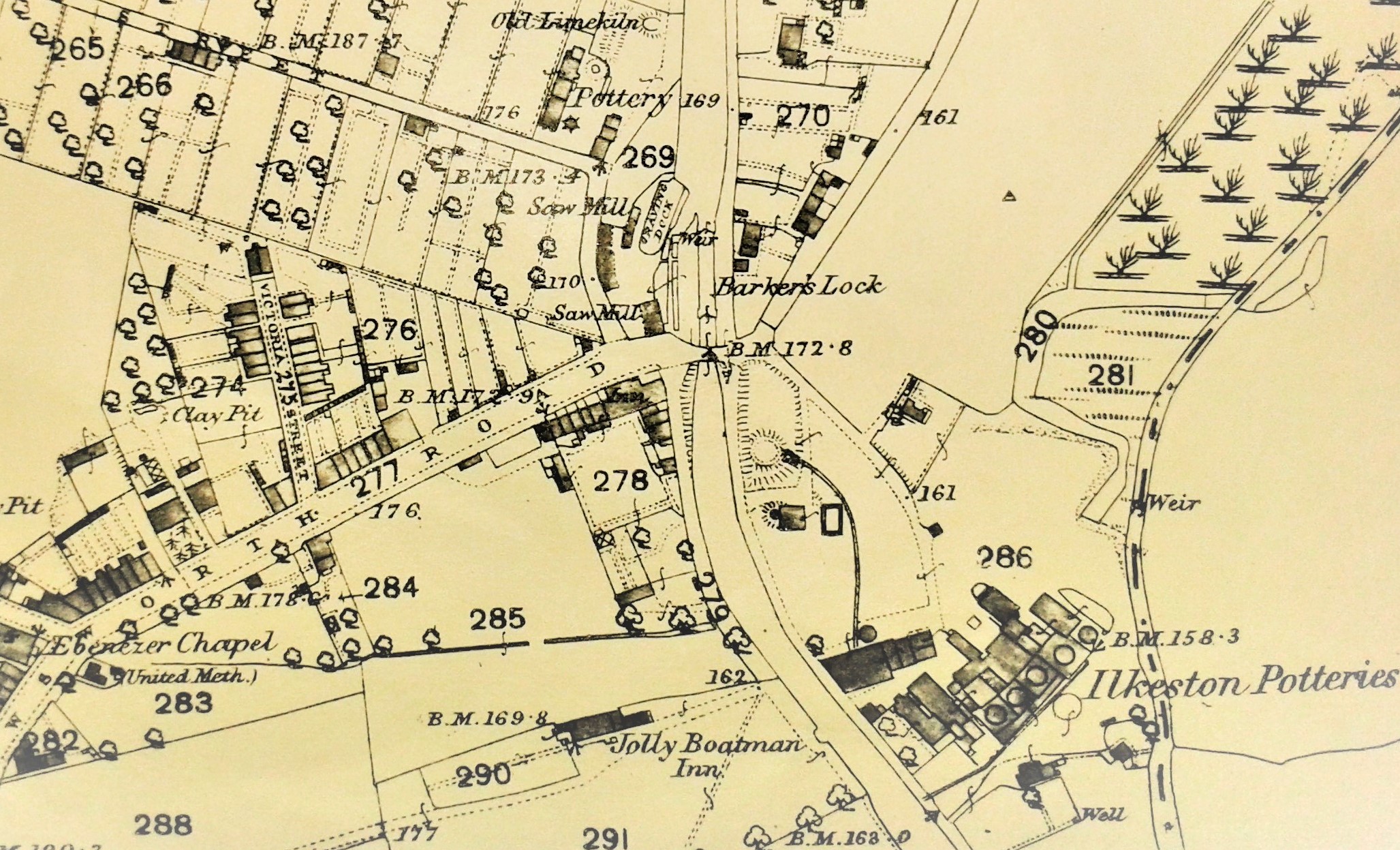
In the middle of the map (above) you can see Barker’s Lock with the Bridge Inn on its south-west corner, and directly south of it is the Jolly Boatman
Thomas Marson was landlord of The Jolly Boatman Inn in 1859. He married Ann Noon whose father was Robert Noon of The Shiply Boat Inn. He appears to have arrived in Ilkeston in the late 1840′s with his first wife Mary (nee Fell) who was born in Helpstone, Northants, daughter of stone mason John and Mary. Thomas and Mary had married at St Mary’s Church in Nottingham on March 28th, 1847 when the groom described himself as an ostler of Long Row, Nottingham.
By 1851 the couple had two children — John Thomas and Jane — but on August 7th, 1852 Mary died of typhus, aged 35. Thomas was then a victualler at the Harrow Inn in the Market Place.(Slater’s Directory 1850/Census 1851)
By 1855 he was at the Jolly Boatman at Canal Bridge off Awsworth Road (Post Office Directory 1855/ White’s Directory 1857/ Harrison, Harrod & Co Directory 1860) … and then seems to disappear from the Directories.
On the 1861 Census he is in North Gate, close to the Durham Ox Inn and on the 1871 Census he lives by the Market Inn in the Market Place .. brewing its beer?
He married his second wife Ann Noon on March 23, 1853 at Christ Church, Cotmanhay, daughter of innkeeper Robert and Lucy Mable (nee Sharp). By then Ann had her illegitimate daughter Elizabeth Noon, born December 5th, 1846.
Thomas died at Rutland Terrace, Ilkeston on December 26th, 1895, aged 76, and was buried three days later in Park Cemetery, Ilkeston (grave number 4318).. his wife Ann was buried in the same plot when she died in 1913.
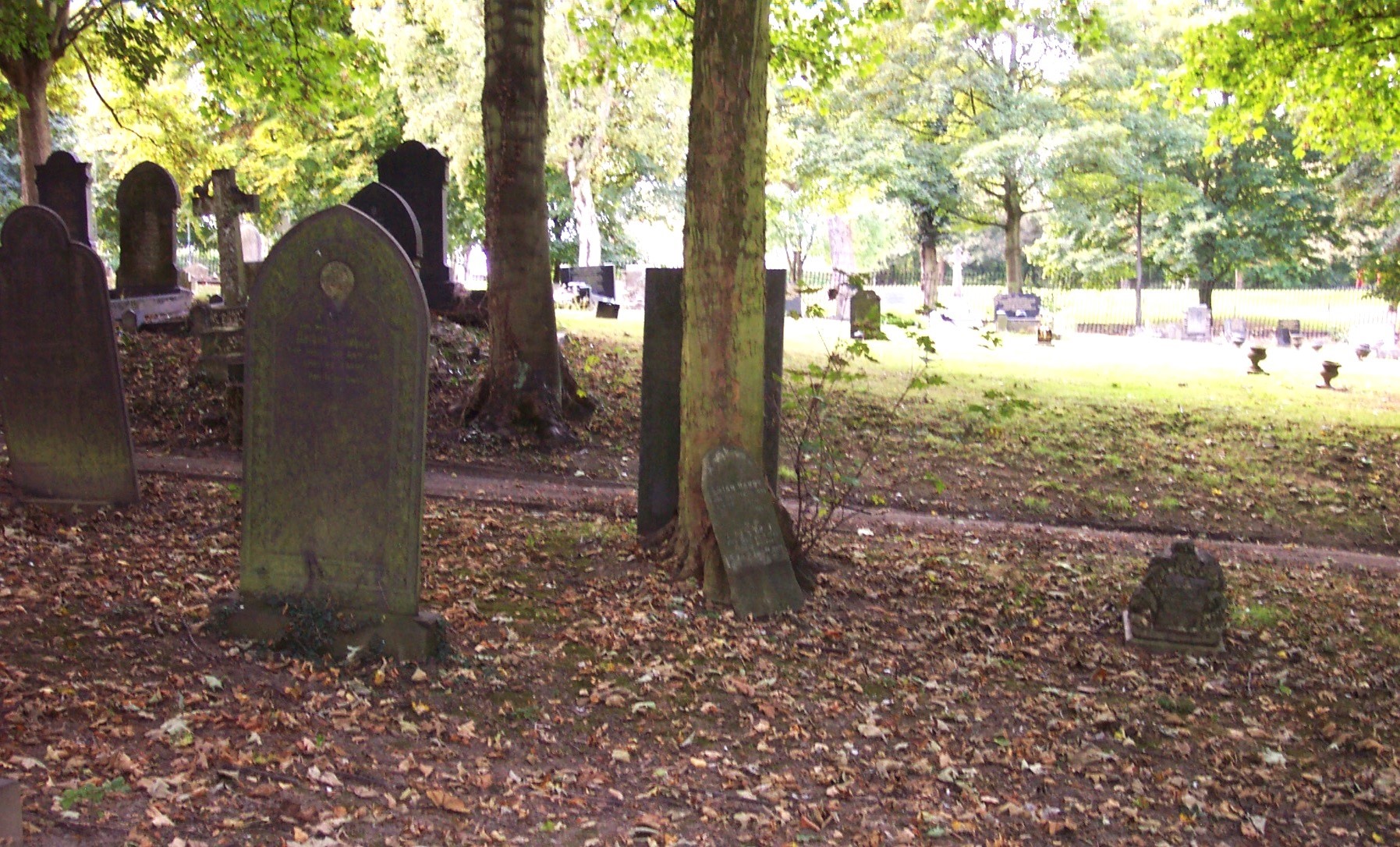
the site of the Marson grave in Park Cemetery
In 1879 the licence of the inn was ‘temporarily’ transferred from Noah Whitehead to John Walton of Codnor Park, and John was still there in the following year when the “Knights of the trigger” visited the Inn. This group was composed of some of the best pigeon shooters in Nottinghamshire and Derbyshire who were here to take part in a championship competition. After three rounds of shooting when some ‘very fair birds’ were released, Mr. S Burton of Nottingham was ahead with no misses. However in the next round a ‘clinking rock‘ succeeded in getting away from him. (A rock was a pigeon and clinking was the noise its wings made as it escaped Mr Burton’s clutches !!). Eventually the early leader was left behind as Mr. Peat of Derby came through to win the event — armed with his muzzle-loader made by John Fry of Saddler Gate in Derby.
It should be noted that Ilkeston was represented by ‘mine host‘ and John Trueman who both dropped out in the early rounds.
Victoria Inn
The Victoria Inn was built 1884/85 adjacent to the Jolly Boatman on Awsworth Road … designed by architect John William Thompson of Derby for William Barton … the first landlord was Alf Whitchurch who then moved from the Jolly Boatman.
William Barton is described as being ‘of Ripley’ and I believe he was an engineer who commissioned the building of the Victoria. The builder was Mr Clowers of Ripley and the cost was £600.
Granby Arms/Great Northern Hotel
At 69 Cotmanhay Road (east side), this was owned by Henry Knighton and tenanted by Samuel Bloor when in the early 1880s it changed its name from the Arms to the Hotel.
Commercial Inn
At 16 Awsworth Road (north side) and adjacent to Commercial Terrace, this was occupied by William Barker in the 1870s and 1880s. In 1888 James Beardsley was landlord.
Nottingham Castle
In April 1889 the licence was transferred from William Sisson to John Thomas Whitchurch
Cotmanhay Lodge
Adeline comments upon this outpost. “At the entrance gates at Shipley was the lodge. This was built in two parts, the living rooms being one side of the gates, the bedrooms on the other side. It must have been very uncomfortable having to turn out into the open on cold, wintry nights before being able to go to bed.
“William Offen and his wife lived at the lodge. William was a smith at Carrier’s, his wife attended to the lodge gates.
“There were no other buildings between the lodge and Workhouse Hill.”
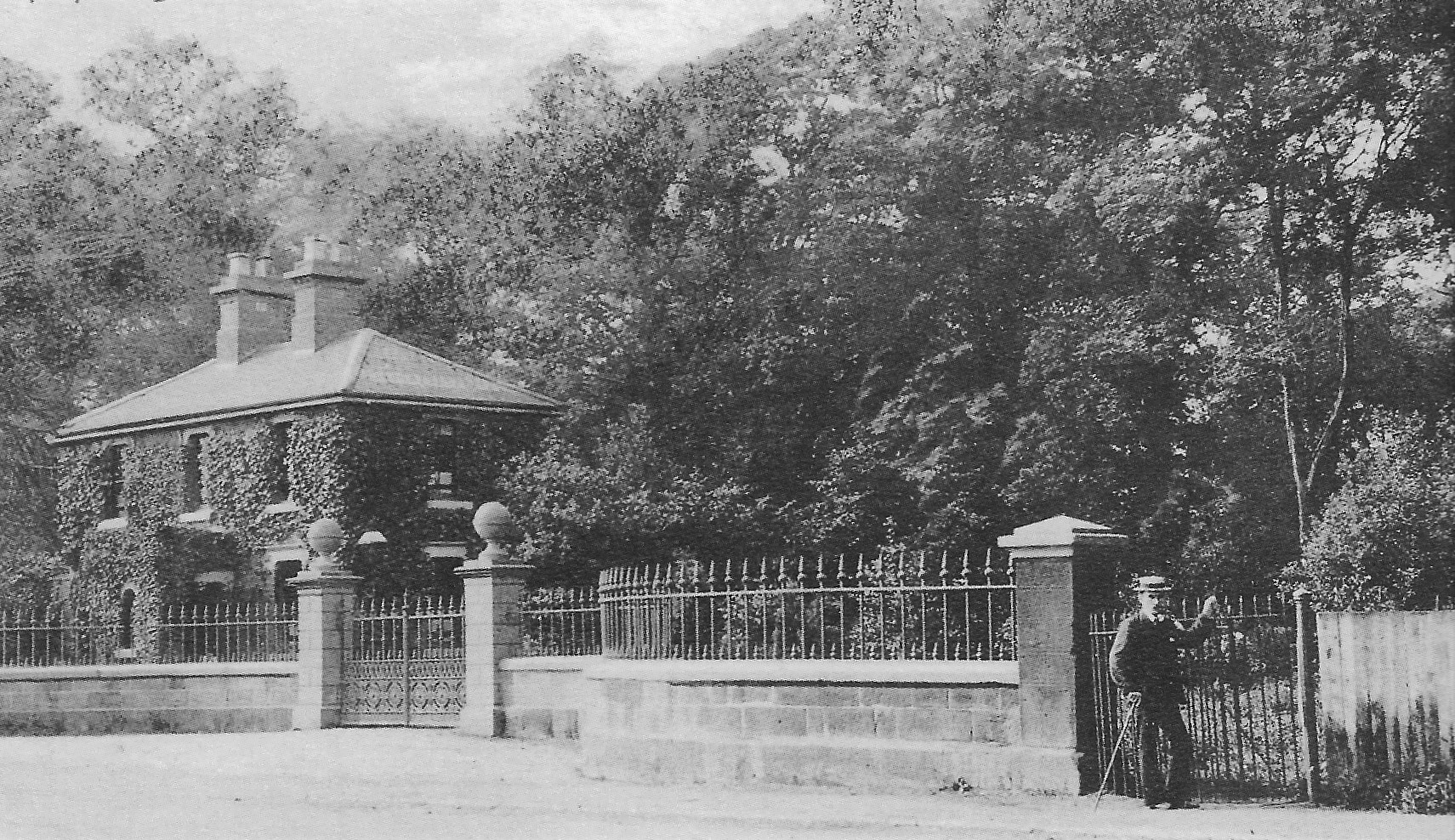
Cotmanhay Lodge about 1914 from a postcard bought at newsagent Henry Bestwick’s shop in the Market Place
The residents of the Lodge were framesmith William Hofton and his wife Catherine (nee Clay), daughter of labourer John and Ruth (nee Levers) and younger sister of Henry Clay, landlord of the Mundy Arms.
Between 1861 and 1891 every census shows the couple at either Hassocks Lane or the Shipley/Cotmanhay Lodge.
I believe that William died in 1901, aged 82, at the home of his only son John and his family, at Durham Road in Yardley.
——————————————————————————————————————————————————–
Walking back down Heanor Road towards the bottom of Bath Street, we come to that part known at one time as Workhouse Hill.
